
Advertisement
Target’s wireless department is in severe decline, according to Wave7 Research.
One of the biggest changes is to staffing. MarketSource reps have stopped staffing the nearly 700 Target stores they were in, removing one of the key pieces that helped make wireless sales possible inside the big-box retailer. MarketSource’s contract with Target ended at the end of May.
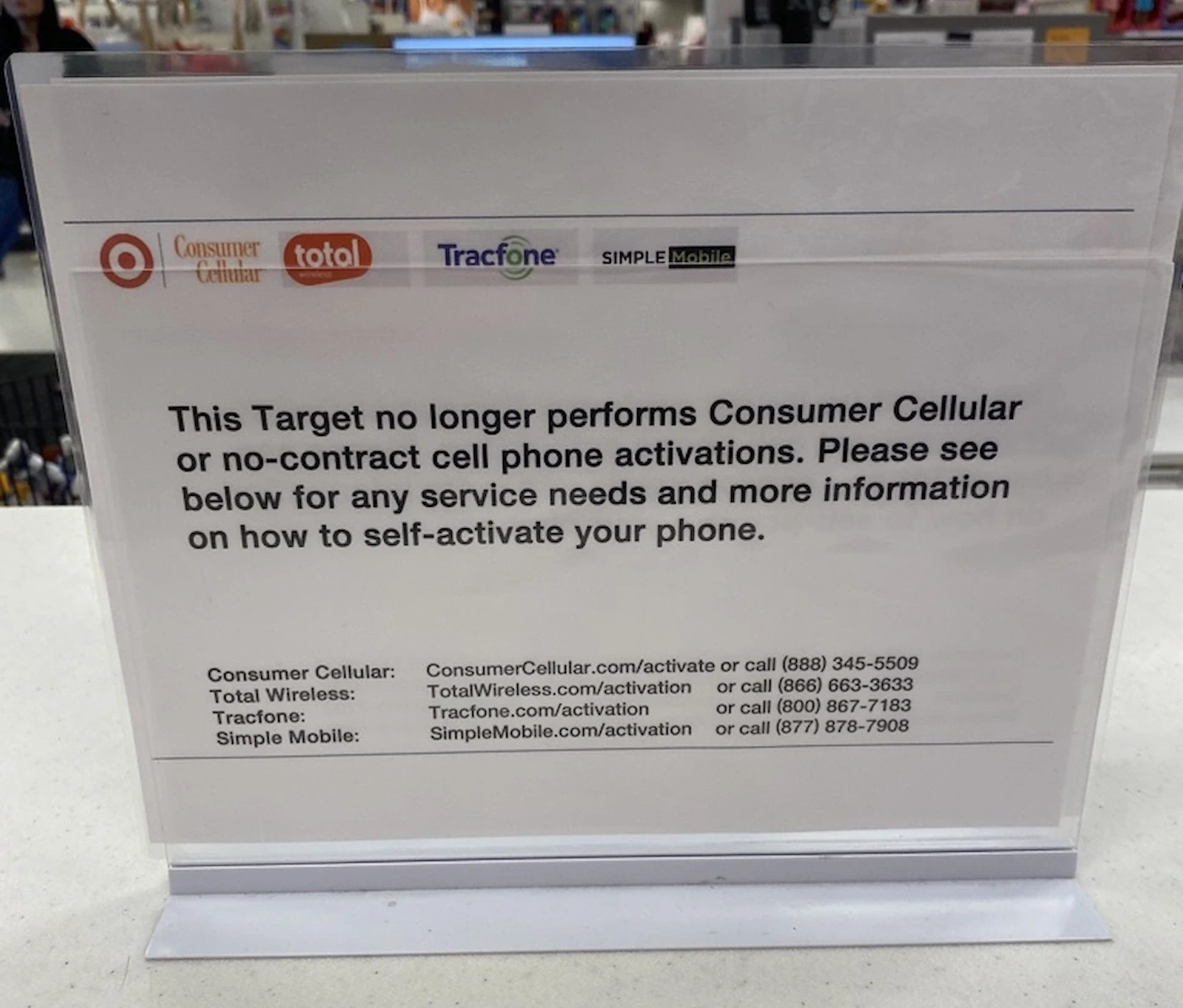
The other major change reported by Wave7 Research is that Consumer Cellular is set to exit the channel. Sources told the firm Consumer Cellular is expected to leave Target over the next month.
For many years, Target served as a major retail arm for Consumer Cellular, giving customers a place to buy phones, activate service, and get in-person support. But between the recent changes to Target’s wireless department, Consumer Cellular’s continued push to open its own stores, and the brand’s continued availability at Walmart and Bi-Mart, Target appears to have become expendable.
In January, BestMVNO reported Consumer Cellular had opened 14 new stores, and in June the company's CEO announced it was on the verge of opening its 100th store. Its latest store just opened in Knoxville, TN. Consumer Cellular first experimented with branded store openings in the fall of 2022, with an acceleration of openings taking place over the last year.
Target has been fading as a wireless venue for years, with Wave7 Research noting displays have often been sparse and that numerous SIMs have been removed from stores over the last one to two years. Google Fi left Target and Best Buy stores in mid-2024. Recent checks by the firm also found thin inventory from Verizon Value brands Total Wireless and Tracfone.
Editor’s Take
Unstaffed wireless displays are not much of a retail strategy, and Target now looks increasingly irrelevant as a wireless sales channel, even more so with Consumer Cellular's upcoming exit. Target isn't just losing one more brand, it is losing the pieces that made wireless work in the store in the first place: reps, inventory, active brand participation, and customer support at the point of sale.
Prepaid wireless is not always a simple grab-and-go category. Some customers know exactly what SIM or refill card they want, but many still need help comparing plans, checking phone compatibility, choosing a device, or getting activated. Target is no longer a help for the latter.
Wireless brands that value assisted selling are putting more weight behind channels that can actually support the customer at the point of sale. That means company-owned stores, dealer networks, Walmart, Best Buy, and other retail partners where wireless is still treated like a category that can produce sales.
“The demise of the mobile department at Target was both stunning and unnecessary. Walmart figured out how to manage wireless sales in a successful way, but Target lost its way in the years leading up to 2020 and it never recovered. This was mismanagement. In April, I tweeted about the vibrant Target mobile department as it was back in 2018: https://x.com/wave7jeff/status/2043458351825109276.” – Jeff Moore, Principal of Wave7 Research
For Consumer Cellular, Target may have once offered reach and in-person support. But with its own stores expanding and other retail channels still available, Target looks easier to cut loose. For Target, that makes the broader wireless department look like one that is being allowed to fade.