
Advertisement
Tax season is one of the bigger selling periods of the year for prepaid wireless. Refund checks hit, traffic picks up, and stores lean harder into switcher deals, free phone offers, sign spinners, and whatever else they can do to pull people in. But in 2026, the season appears to have come and gone with less energy than usual.
According to the latest prepaid report from Wave7 Research, tax season reached its peak during the last week of February and the first week of March. On the whole, sources said it felt soft relative to most prior years, although a Boost source did tell Wave7 traffic was up modestly versus tax season 2025. But taken more broadly, the season did not seem to have the same juice it often has.
Some of that showed up right at the store level. Wave7 said it did not observe sign spinners or swatters during tax season, something that has historically been part of the seasonal retail playbook. Seasonal prepaid promotions were still in place but the only notable display Wave7 highlighted was a cardboard display with discounted Motorola smartphones from Straight Talk that appeared in a minority of Walmart stores. That is pretty quiet for what is normally the biggest selling period of the quarter.
Even so, consumers who did buy phones still showed a pretty clear preference for lower-cost devices.
Wave7 said the Galaxy A17 and the Moto G were the standout Android performers during tax season, both in promotional energy and in sales and they were the biggest volume drivers in prepaid overall. On the Apple side, the iPhone 16e was the top iPhone.
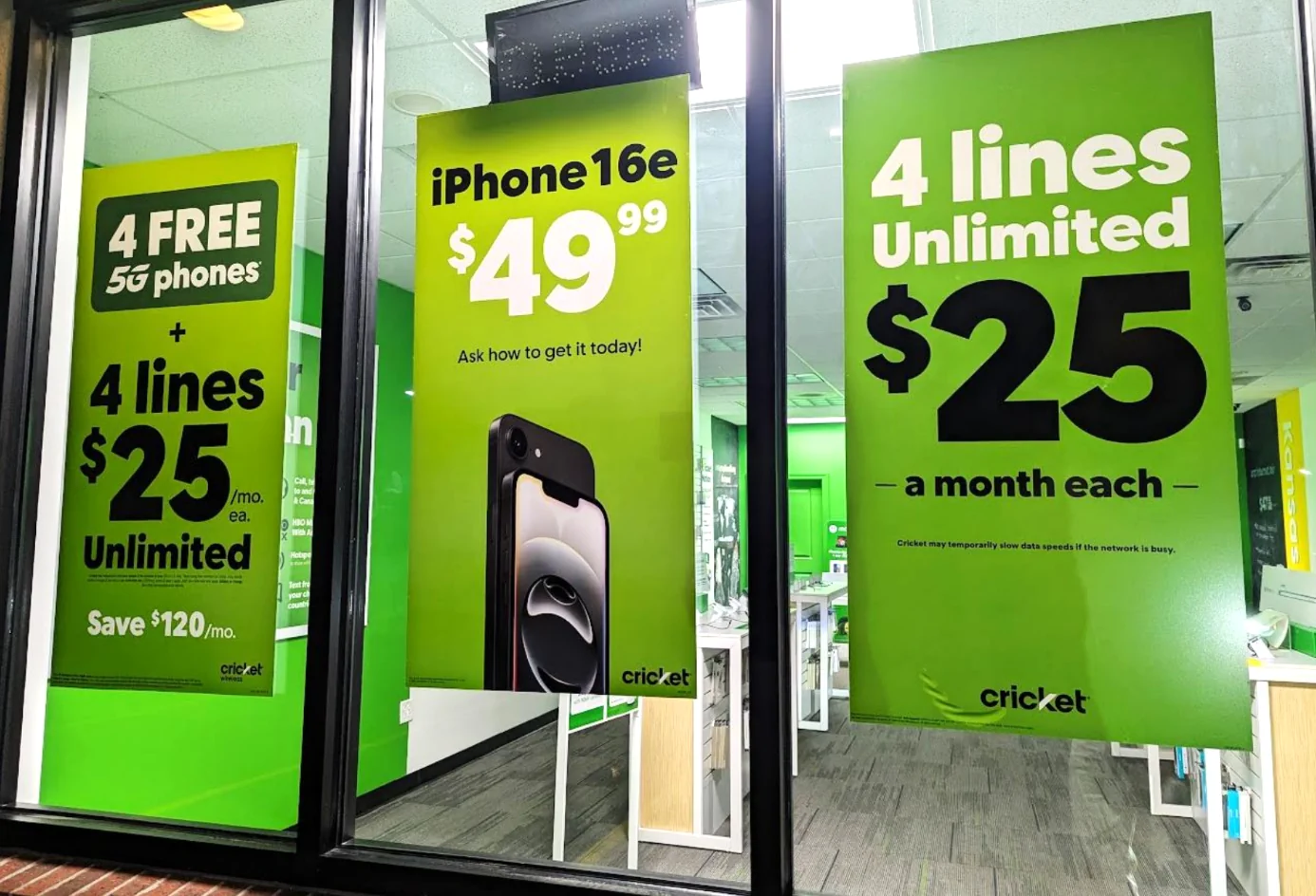
Metro has been pushing the Galaxy A17 as free for switchers while Cricket has been heavily promoting the Galaxy A16 as free for switchers and spent much of March advertising the iPhone 16e. Verizon’s prepaid brands, including Straight Talk and Verizon Prepaid at Walmart, have also leaned hard into low-cost Androids such as the Galaxy A16, Galaxy A17, and Moto G lineup. Even with a softer overall tax season, the device playbook did not really change with Androids still doing the heavy lifting.
In prepaid, the tax season is primarily about shoppers having more money in their hands and providers maximizing perceived value to them. A free or heavily discounted Android phone paired with an “unlimited” plan continues to be one of the easiest ways for carriers to do that. The Galaxy A series and Moto G series sit right in that sweet spot. They are recognizable, functional, and inexpensive enough to anchor aggressive promotions to without blowing up margins behind them.
Editor's Take
A softer tax season is a bit of a canary in the coal mine for the prepaid sector. Historically, this is the window where carriers expect a massive influx of port-in activity driven by cash-heavy consumers. The lack of retail "theatrics," like those missing sign spinners and swatters might suggest that wireless providers might be tightening their belts or shifting their customer acquisition strategies.
While the Galaxy A17 and Moto G continue to provide the necessary volume, the "softness" reported by Wave7 Research should be a concern for the industry at large. If the big three prepaid brands can’t find their "juice" when consumers have the most liquidity, it raises questions about what the rest of 2026 looks like. We’re seeing a market that is increasingly pushing unlimited plan prices lower for new customers, and perhaps one that needs to be bit more disciplined with its marketing spend.
The reliance on the Galaxy A-series and Moto G lineup as the primary "switcher bait" isn't new. A free phone offer is still one of the easiest ways to get a customer through the door, but the real needle mover for the rest of 2026 is could be about the "total home" bundle.
As BestMVNO noted yesterday, Cricket is already moving in this direction by pushing AT&T Fiber alongside AT&T Internet Air, with a rumored rebrand in the coming months to "Cricket Internet." If carriers can successfully tether a discounted Android to a high-margin home internet subscription, a softer tax season is less of a concern. We are entering an era where the "free phone" is just the opening act for a much larger convergence play, making the traditional tax season retail "theatrics" less relevant than the ability to lock down a household's entire connectivity budget.
“Tax season isn’t what it used to be. Less advertising and no sign spinners or swatters. That said, it is still prominent on the marketing calendars of prepaid carriers and there is a surge when tax refunds arrive.” – Jeff Moore, Principal of Wave7 Research