
Advertisement
Wave7 Research’s latest prepaid report shows carrier-owned prepaid brands are increasingly using home internet and bundle discounts as another way to compete. Every major carrier now has at least one prepaid or prepaid-adjacent brand selling home internet, and many are starting to promote wireless-plus-internet bundle savings.
Cricket is one of the more interesting examples. Wave7 notes that Cricket is selling Quantum Fiber in legacy Quantum markets, which are largely in the western United States, although Orlando and Ft. Myers, Florida are also included. At the same time, Wave7 continues to see $47/month fixed wireless internet pitched routinely in Cricket stores. Fiber, however, is still not being pitched at most Cricket locations, even though a broader rollout was believed to have been planned for April.
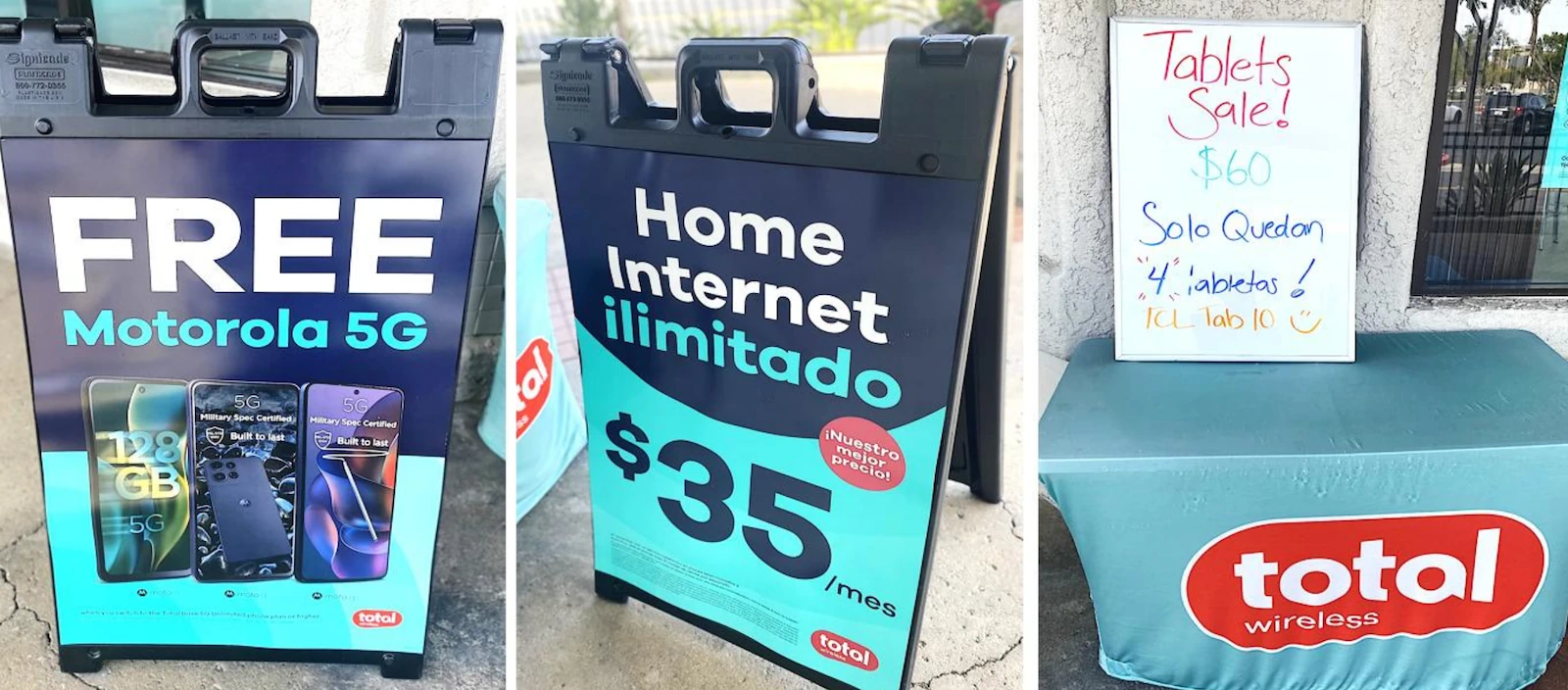
Verizon’s prepaid brands are also leaning into home internet. Straight Talk is promoting a $10/month discount on home internet for customers who bundle it with an unlimited wireless plan. Tracfone Home Internet launched late last year and began appearing in a TV ad in the second half of February. Total Wireless is offering a free month of internet for new customers who bundle it with a voice plan. Visible also entered the fixed wireless market a few weeks ago, with pricing starting at $30/month.
T-Mobile’s prepaid side is now part of the trend as well. Mint Mobile announced a bundle in April that includes mobile service and home internet for $45/month, based on an upfront payment of $540 for one year of service. Mint has long used annual prepayment to advertise lower monthly wireless prices. It is now applying that same model to a mobile-plus-home-internet bundle.
Boost Mobile is taking a different approach with Starlink and is not bundling. Wave7 says Boost now has Starlink displays in more than 430 stores, up sharply from about 120 stores in February. For years, many Boost stores have also featured displays for cable internet from Comcast, Charter, or Cox. Starlink gives Boost another broadband product to pitch, particularly in rural areas where traditional broadband options may be weaker.
Independent MVNO US Mobile also entered the space last month with a Starlink bundle. Customers can get an unlimited wireless plan bundled with Starlink for as low as $47/month for their first year.
Editor’s Take
This is one of the more important prepaid trends of 2026 because it gives carrier-owned prepaid brands another front to compete on. It also gives them something more valuable to sell than another wireless line.
A household with both phone service and home internet tied together on one bill is more difficult to move. There is more billing attachment, more perceived value, and more friction when the customer thinks about switching.
Cable companies figured that out years ago. They used home internet relationships to sell wireless and build large mobile subscriber bases. BestMVNO’s MVNO and prepaid subscriber tracker shows that cable companies now account for more than 21 million wireless lines. Carrier-owned prepaid brands are now trying to work the other side of that same equation by using wireless stores, prepaid brands, and prepaid customer relationships to sell home internet.
That creates a real problem for independent MVNOs.
Carrier-owned prepaid brands can increasingly lean on their parent companies’ home internet products, whether that means fixed wireless, fiber, or another in-house broadband offer. Independent MVNOs do not have access to those same products. They cannot simply sell the same carrier home internet service that Cricket, Total Wireless, Straight Talk, Visible, Mint, or Metro may be able to promote through their ownership or carrier relationships.
That leaves independent MVNOs with fewer options. They can partner with third-party broadband providers, as US Mobile has done with Starlink. Boost Mobile is also using Starlink as another broadband pitch. But that is not the same as having a tightly integrated carrier-owned home internet product.
Starlink may be a strong option for some rural households, but it is not always a direct substitute for carrier fixed wireless or fiber. Pricing, installation, equipment, service availability, and customer fit can all be different.
The result is that carrier-owned prepaid brands may be able to compete with a wider bundle while independent MVNOs are still mostly competing on wireless price, plan features, customer service, and brand positioning. That is already a tougher fight. It becomes even tougher when carrier-owned prepaid brands are also pushing unlimited plans down to price points where independent MVNOs have traditionally competed with limited-data plans.
If carrier-owned prepaid brands keep adding home internet to their sales pitch while independent MVNOs remain locked out of comparable carrier broadband products, the competitive gap between owned prepaid brands and independent MVNOs could get wider.
“The Internet paradigm has changed. Historically, Internet customers faced a duopoly – the cableco and the telco. Now, not only are there successful fixed wireless offerings from T-Mobile, Verizon, and AT&T, many other Internet options have emerged, ranging from offerings from Total Wireless, Straight Talk, Visible, Mint Mobile, Tracfone, Starlink, WISPs, and others, in addition to emerging fiber options at Cricket Wireless stores. One question still to be answered is how do MVNOs develop an Internet/voice bundle to compete?” – Jeff Moore, Principal of Wave7 Research